Travel guide
Thimphu
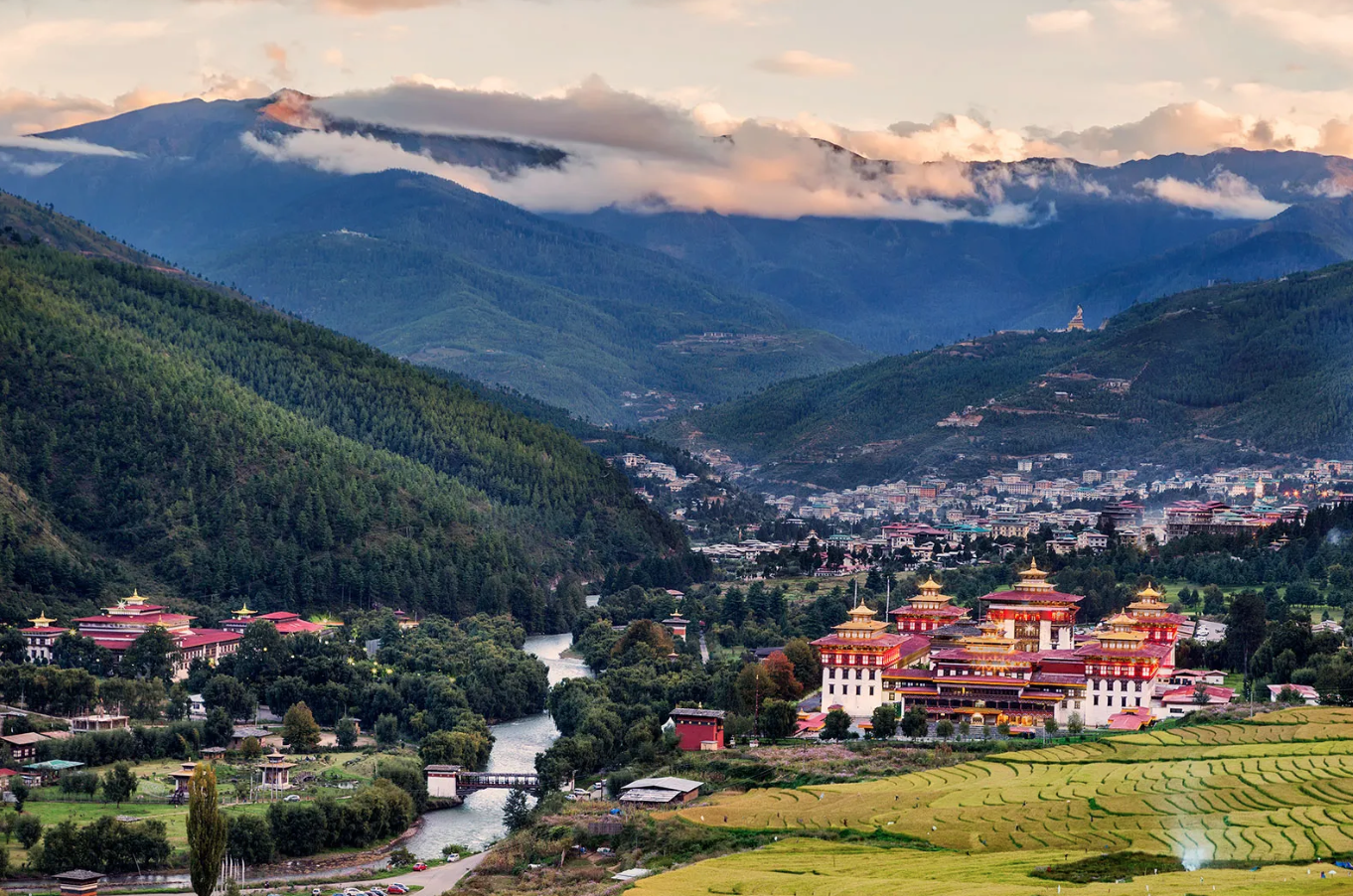
Nestled in a Himalayan valley at ~2,350 m, Thimphu is one of the world’s highest capital cities. As Bhutan’s political and cultural centre, it blends traditional Buddhist heritage with modern development—all guided by the nation’s philosophy of Gross National Happiness
Top Things to Do
-
Tashichho Dzong (Thimphu Dzong): Built in 1641 and rebuilt in 1962, this grand fortress houses Bhutan’s government offices and the throne room. It’s particularly stunning when illuminated at night, and hosts the annual Thimphu Tshechu festival
-
Buddha Dordenma Statue: A colossal 54 m bronze-gilded Buddha on Kuensel Phodrang Hill overlooking the city. Inside are over 100,000 miniature Buddhas and landscaped gardens—best viewed at sunrise or sunset
-
National Memorial Chorten: This striking white stupa with golden spires was built in 1974 to honor Bhutan’s third king. Locals often circumambulate and spin prayer wheels here at dawn and dusk
-
Motithang Takin Preserve: Home to Bhutan’s national animal, the Takin, this semi-wild preserve also hosts sambar deer and other fauna in a natural hillside setting
-
Clock Tower Square: In the city centre, this ornate clock tower with dragon carvings is surrounded by shops, cafés, and hosts live concerts and events
-
Tango & Phajoding Monasteries: Scenic half-day hike to the 1688 Tango Monastery located 14 km above the city; Phajoding Monastery sits higher on a ridge, known for its meditative trails
-
Centenary Farmers’ Market: Bhutan’s largest weekend market offering fresh produce, local spices, and handicrafts—a photographer’s and food-lover’s delight
-
Choki Traditional Art School & Institute of Zorig Chusum: Engage with students learning Bhutan’s 13 traditional crafts—including painting, weaving, and carving—at Choki School or the national institute
Eat & Drink
-
Local eateries & city cafés: Try momo-style dumplings, noodle bowls and Druk Lager at places like Momo Corneror organic food at Chuniding Food and Folk Heritage Restaurant for authentic local flavors
-
Nightlife & live music: Evenings draw visitors to Capital’s Watering Hole or Cloud 9 for a casual vibe, Bhutanese bar food, and live entertainment
Travel Tips
Best Time to Visit
-
Spring (March–May) features rhododendron blooms and festivals like Paro and Thimphu Tsechu. Clear skies and mild weather make it a top season for trekking and cultural visits
-
Autumn (September–November) is another peak season with crisp skies, perfect for festivals, photography, and trekking. Thimphu Tshechu, a colorful masked-dance festival, happens in September/October
-
Summer (June–August) brings lush green landscapes but heavy monsoon rains—ideal for off-season travelers seeking a quieter, budget-friendly visit
-
Winter (December–February) offers serene calm and occasional snow, especially outside the valley. Lower crowds and cooler weather suit relaxed sightseeing
Permits & Practicalities
Tourists must arrange travel through certified Bhutanese tour operators; the Sustainable Development Fee (~$100/day) includes visa and guiding, supporting cultural preservation and sustainability goals
Mobility & Attire
Thimphu has no traffic lights—signals are regulated by uniformed police. Modest clothing (covered shoulders/legs) is required at religious sites. Comfortable hiking shoes are recommended for monastery treks
Accommodation & Recommended Stay
Stay near the central area (Clock Tower Square or along Norzin Lam) to enjoy easy access to shops, cafés, and Dzong views. Options range from mid-range hotels to B&Bs with mountain views.
Recommended Accommodation:
-
Services like Six Senses Bhutan offer upscale, immersive stays (as mentioned in local guide context) while city boutique hotels near the Clock Tower give convenience and charm