
Travel guide
Taranto, Italy
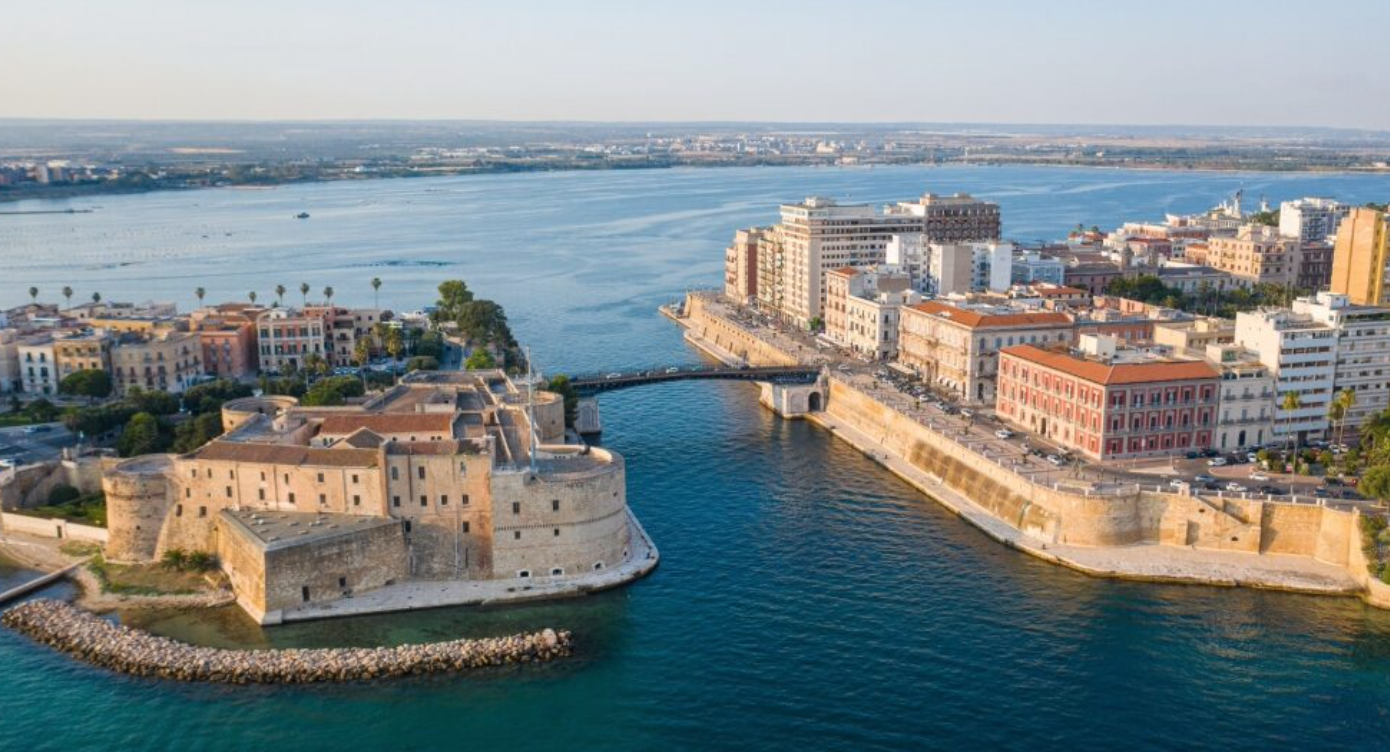
Taranto, founded by Spartan Greeks in the 8th century BC as Taras, later became Tarentum, a key part of Magna Graecia and one of the ancient world's largest cities. Today it's known as La Città dei Due Mari (City of Two Seas), positioned between the Mar Grande and Mar Piccolo bays, with a compact Old Town island and a newer mainland district connected by the iconic swing bridge, the Ponte Girevole
Top Things to Do
-
National Archaeological Museum (MArTA)
Among Italy’s most important museums devoted to Magna Graecia, MArTA features the famed Gold of Taranto, statues, ceramics, mosaics and more -
Castello Aragonese
A 15th-century fortress guarding the Old Town, once a prison and now open to tours—offering history and striking views of the sea -
Cathedral of San Cataldo
Apulia’s oldest cathedral (11th century), blending Romanesque, Baroque, and Byzantine styles, with mosaics, Paolo de Matteis frescoes, and relics of Saint Cataldus -
Temple of Poseidon
Oldest Greek temple in Taranto (6th century BC). Only two remaining Doric columns—tangible evidence of the city’s Spartan origins -
Boat tour of Mar Piccolo
Scenic cruises in the lagoon reveal mussel farms, military sites, flamingos, and views of the Ponte Girevole in action—especially magical around sunset -
Promenade & squares
Stroll along Lungomare Vittorio Emanuele III, lined with palm trees and cafés, and visit piazzas like Piazza Ebalia and Piazza Fontana, bustling with life and architecture -
Monumento al Marinaio
The Sailor’s Monument is a 7-meter bronze tribute to Italian naval history and Taranto’s WWII battle heritage -
Old Town (Borgo Antico)
Wander its labyrinthine alleys, markets, fishing boats, and simple trattorias serving fresh seafood such as tubettini with mussels and cozze alla puppitegna
Eat & Drink
-
Seafood specialties: Famous for cozze nere di Taranto (mussels), especially alla puppitegna (garlic, olive oil, parsley), as well as mussels impepata, fried fish, and spaghetti with mussels from the unique saline mix of Mar Piccolo waters
-
Local dishes: Don’t miss tiella (rice, mussels, potato pie), pucce sandwiches, panzerotti, and sweet pasticciottocustard pastry. Pair meals with local red wines like Primitivo or Negroamaro .
-
Recommended restaurants: Try seaside eateries within Borgo Antico like Paranza on Via Cariati—or value spots like Trattoria Il Ghiottone for Puglian home cooking and house wine deals (~€12 for full meals) .
Travel Tips
-
Best time to visit: May to early October offers warm sea weather. October still offers sunny days and fewer crowds; evenings along the promenade can be atmospheric even into late season
-
Getting there & around: Reachable by train from Bari, Rome, or Brindisi. Brindisi Airport is closest for flights. The Old Town is walkable, and boat tours provide a lovely local perspective
-
Safety & etiquette: Taranto is generally safe. Fisherfolk and locals are friendly. Dress casual, speak a basic buongiorno or grazie, and enjoy relaxed southern Italian hospitality.
-
Cultural note: Known for the legendary tarantella dance. Taranto’s history includes ancient rituals and maritime traditions reflecting its Greek and naval heritage
Where to Stay
-
Borgo Antico (Old Town): Charming hotels or B&Bs within walking distance of main sights, markets, and dining.
-
Borgo Nuovo / Waterfront: Stay near Lungomare for sea views, larger hotels, and easy promenading.
-
Nearby beaches and countryside: Consider Lido Azzurro or San Vito Beach for seaside relaxation after exploring the city