
Travel guide
Pozzuoli
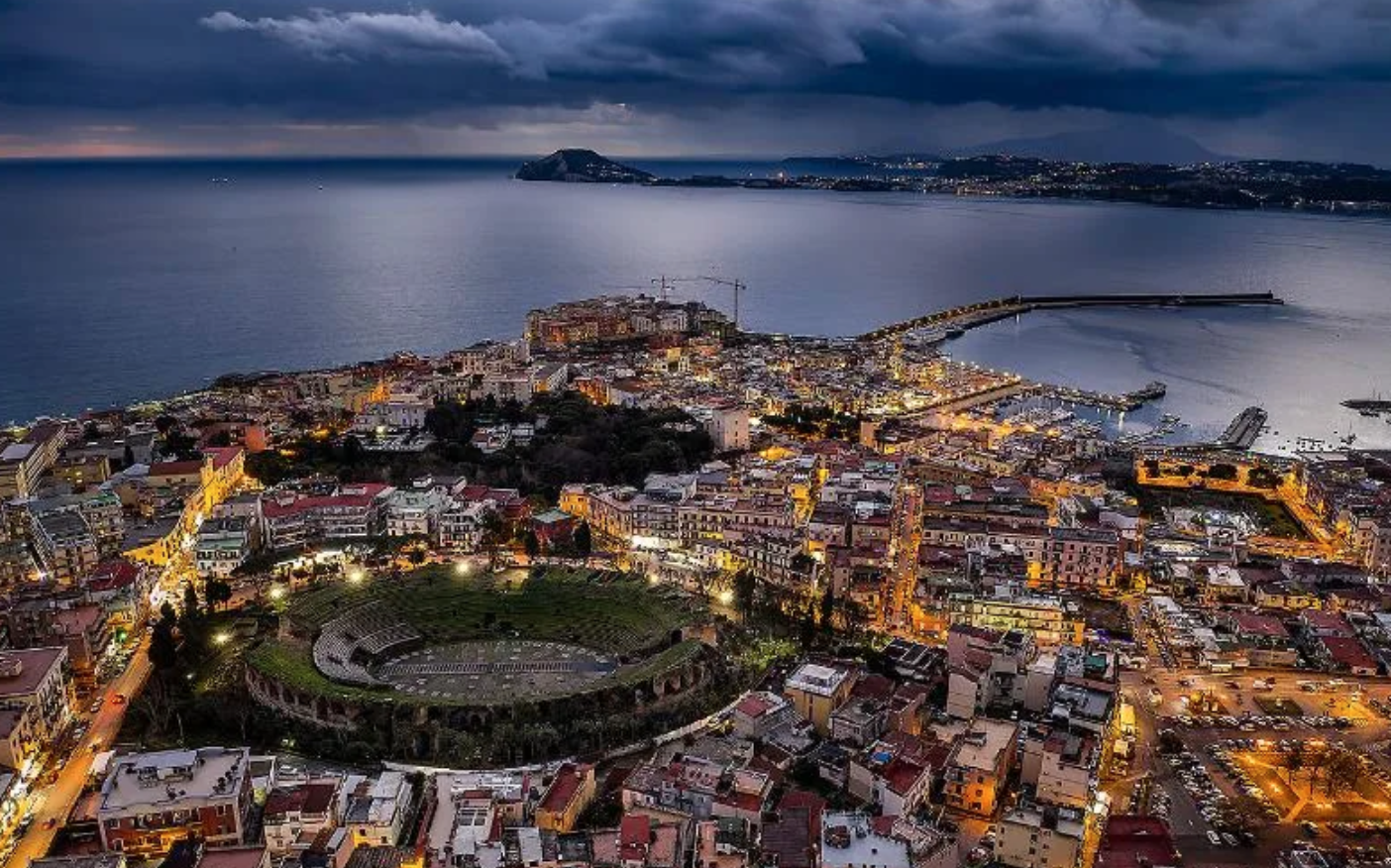
Once a thriving Roman port known as Puteoli, Pozzuoli was a key maritime hub and cosmopolitan center in antiquity, later shaped by Greek origins, medieval change, and volcanic pressures from underground heat (bradyseism) that still subtly reshape the coast today.
Located on the shores of the Gulf of Pozzuoli, this compact but dynamic town combines archaeological wonders, active geology, seafood-specialized cuisine, and picturesque port walks.
Top Things to Do
• Flavian Amphitheatre
Italy’s third-largest Roman amphitheater (after the Colosseum and Capua), built under Vespasian and Titus. Visitors can descend into its underground chambers—once housing animals and scenery mechanisms—for an immersive experience in ancient spectacle. Able to seat up to 50,000 people in its heyday.
• Temple of Serapis (Macellum)
Not actually a temple, but a 1st-century AD Roman marketplace famously misidentified when a statue of Serapis was found. Its columns, showing marine mollusc erosion, reflect fluctuating sea levels caused by bradyseism—making it both an architectural and geological landmark.
• Rione Terra (Old Town)
Perched on a tufa promontory above the Gulf, Rione Terra served as Pozzuoli’s Greek acropolis and was evacuated in the 1970s due to seismic activity. Now reopened as an archaeological open-air museum, its narrow lanes and restored structures span millennia of urban history.
• Pozzuoli Cathedral (Duomo di San Procolo)
Built within a former Temple of Augustus, the church blends ancient Roman pillars with modern restoration. Inside, it houses relics of Saint Proculus, the city’s early Christian patron.
• Solfatara Crater & Campi Flegrei
Explore the semi-active Solfatara volcano—an iconic geothermal crater with steaming fumaroles, bubbling mud vents, and sulfur-rich soils. Guided tours offer educational access to this living geological site. The broader Campi Flegrei region includes Lake Avernus, Astroni crater, and volcanic trails.
• Guided Phlegraean Fields Walking Tour
A top-rated ~2-hour guided tour from Pozzuoli metro station that covers the Amphitheatre, Temple of Serapis, historic town centre and scenic waterfront vistas. Available in multiple languages, with headset audio support.
• Archaeological Museum of the Phlegraean Fields
Features artifacts from across the region—sculptures, mosaics, daily-use objects, and landscape explanations that contextualize Pozzuoli’s long human and geological history.
Eat & Drink
-
Seafood specialties: Try Brodetto Pozzuolano (local fish soup), grilled fish, and local seafood pasta—fresh from the coast and distinctly Neapolitan in flavor.
-
Pastries & local flavors: Don’t miss sfogliatella riccia, strong espresso, and Italian pastries in seafront cafés.
-
Nightlife & waterfront dining: The harbor promenade buzzes by evening with family-run trattorie, bars, and lively local character.
Travel Tips
-
Best time to visit: Late spring to early fall for balanced weather and activities; summer brings more energy and evening promenade life. Avoid hotter months if sensitive to humidity.
-
Volcanic activity awareness: Pozzuoli sits in a red-zone of the Campi Flegrei caldera—ongoing bradyseism may cause tremors. As seen recently, restaurants offer reassuring hospitality, and visitors are advised to follow official emergency instructions.
-
Getting there: Easily accessible by train or metro from Naples. Pozzuoli station connects via Line 2. Walkable centre with hillside trails and ferry service across the bay.
-
Duration of stay: A day covers key sites; 2–3 days recommended to explore Solfatara, Rione Terra, reef-edge dining, nearby islands and Naples day trip.
Where to Stay & Recommendations
-
Stay in Pozzuoli town centre for easy access to archaeology, port strolls, and local restaurants.
-
Look for budget-friendly guesthouses, B&Bs or the Vulkan Capsule Hostel—Campania’s first capsule hostel—for compact smart stays.
-
For Options in nearby Naples or coastal resorts if you want more hotel variety with easy transit.