
Travel guide
Agadir
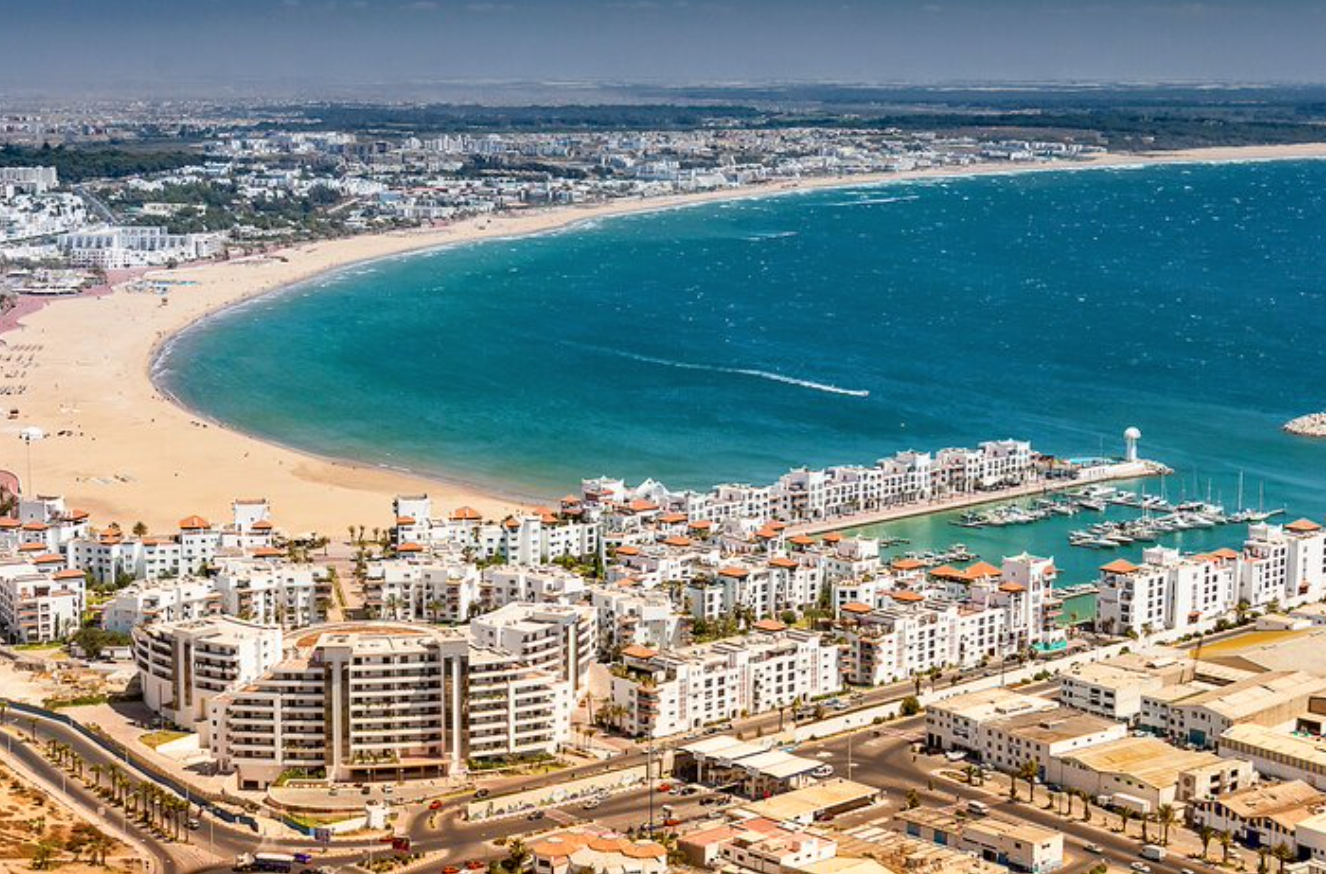
Agadir is a sun-drenched coastal city in Morocco’s Souss‑Massa region, rebuilt after the devastating 1960 earthquake. Today it’s known for its modern layout, sandy beaches, Amazigh (Berber) heritage, and year-round warm climate—often called an “easygoing city break destination” with deep local culture
Top Things to Do & See
-
Agadir Beach & Promenade – A broad golden-sand beach ideal for sunbathing, swimming, camel rides, and seaside cafés along the boulevard
-
Kasbah of Agadir Oufela – Perched 236 m above the city, this iconic hilltop fortress offers panoramic views of the bay and city below; reachable by foot or taxi (~100 MAD each way)
-
Souk El Had – Morocco’s largest marketplace with over 3,000 stalls selling spices, textiles, crafts, argan oil, and more. Expect lively bartering and peak activity on Sundays, Mondays, and Thursdays
-
Museum of Amazigh Culture – Housed at Aït Souss Square, this museum showcases traditional Berber clothing, jewelry, instruments, and crafts (~€2–5 entry)
-
Crocoparc Agadir – A botanical and crocodile zoological park in Drarga featuring hundreds of Nile crocs, tortoises, iguanas, plus feeding presentations and themed gardens
-
Paradise Valley & Paradise pools – A lush Tamraght River valley about 35 km north with rocky pools, cascades, palm groves and hiking trails—ideal for a nature escape from the coast
-
Taghazout & Surfing – Just 15–20 km north, Taghazout is world-famous as a surf town; lessons and board rentals are widely available, even for beginners
-
Souss‑Massa National Park – Between Agadir and Sidi Ifni, this expansive coastal reserve features dunes, wetlands, argan forests, and rare species like the bald ibis—about an hour’s drive
-
City gardens & marina – See the valley of the Birds park, Garden of Olhão, marina promenades, and the photogenic fishing port near the waterfront
Eat & Drink
-
Sample Moroccan classics—couscous, tagine, kefta—at local cafés along Boulevard Hassan II or near Souk El Had. Try La Fontaine for mint tea and pastries with a sea breeze view
-
Beacheside cafés, markets, and the marina offer fresh seafood and juices. Les Blancs bar at sunset is particularly scenic for a drink with panoramic views
Travel Tips & Practical Advice
-
Best time to visit: Spring (Mar–May) or autumn (Sep–Nov) offer mild, pleasant weather (20–28 °C) with fewer crowds. Summer is hot (25–35 °C); winter suits budgets with lower prices (~15–20 °C)
-
Getting around: Agadir-Al Massira Airport connects many European cities. Within the city, use metered taxis or rent a car. Walking is ideal around the beach, souk, marina, and medina
-
Staying respectful during Ramadan: Tourists are welcome, but eating, drinking, or smoking in public during daylight is culturally sensitive. Non-Muslims may dine indoors; nightlife continues after sunset
-
Cultural etiquette: Dress modestly in markets and religious sites. Bargaining is expected at Souk El Had. Learn phrases like "sabah al‑khayr" (good morning) and “La choukran” (no thank you) for friendly exchanges.
Where to Stay & Recommended Accommodation
-
Luxury/Beachfront Resorts: See options like Beachfront spa hotels and Villa Blanche or The View for upscale Moroccan hospitality, some with sunrise yoga or golf access—expect around €70–150/night
-
Mid-range & Riads: Ibis Agadir or local riads in Talborjt or near the marina offer comfort at moderate prices—best for cultural immersion without overspending
-
Budget/Hostels: Basic surf hostels or guesthouses near the beach and city center are good value for solo travellers or backpackers