
Blog
Padua: Italy’s Enchanting City of Frescoes, Faith, and Medieval Charm
Explore Padua’s Renaissance beauty—home to Giotto’s frescoes, Galileo’s legacy, and one of Europe’s oldest universities. A magical blend of sacred art, science, and Italian soul.
🇮🇹 Padua: Italy’s Hidden Gem of Frescoes, Faith, and Timeless Flair
🎨 Giotto’s Masterpiece: The Scrovegni Chapel
Padua is home to one of the greatest fresco cycles in Western art: Giotto’s Scrovegni Chapel. Painted in the early 1300s, these frescoes revolutionized Renaissance art.
🖼️ Highlights:
-
The vivid Last Judgment
-
Life of Christ and the Virgin Mary
-
Early signs of realistic emotion and perspective in European painting
🕰️ Visits are strictly timed—book tickets in advance for this UNESCO-listed treasure.
⛪ Basilica of Saint Anthony: A Sacred Pilgrimage Site
The majestic Basilica di Sant’Antonio is not only a stunning example of medieval architecture but also one of Italy’s most important pilgrimage destinations.
Inside:
-
The tomb of Saint Anthony of Padua
-
Elaborate baroque chapels
-
Artworks by Donatello, including the bronze high altar
-
Miracles attributed to the saint are honored here
📍 Located in Piazza del Santo, it’s a place of peace, faith, and reverence.
🧪 Galileo’s Padua: Science Meets Spirit
Padua was Galileo Galilei’s intellectual home for nearly two decades. He lectured at the University of Padua, one of the oldest in Europe (founded in 1222), where modern science took root.
Don’t miss:
-
Palazzo Bo – The university’s historic heart
-
The Anatomical Theatre – The first in the world (1595)
-
The world’s oldest botanical garden (Orto Botanico), a UNESCO site, founded in 1545
🏛️ Piazza dei Signori & Prato della Valle: Grand Spaces to Stroll
Padua’s piazzas are some of Italy’s most scenic and atmospheric.
🏛️ Piazza dei Signori – A lively square framed by clock towers and Renaissance palazzi
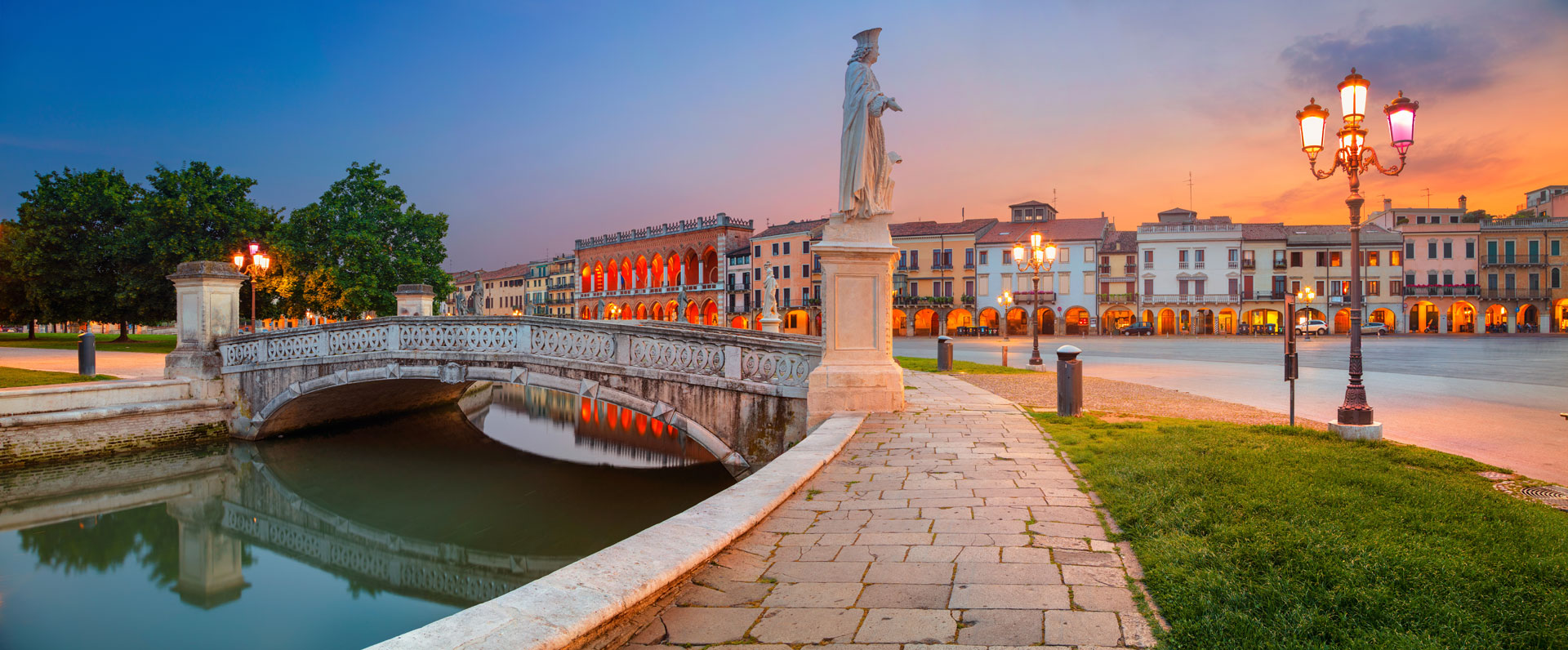
🌿 Prato della Valle – One of Europe’s largest squares, ringed by a canal and statues—ideal for picnics, walks, and weekend markets
☕ Grab an espresso at historic cafés like Caffè Pedrocchi, once frequented by poets and professors.
🛍️ Markets, Fashion & Local Flavors
Padua’s soul is best found in its markets and food stalls.
🛍️ Mercato della Frutta e della Verdura (Fruit and Veggie Market) – One of Italy’s oldest daily markets, held in Piazza delle Erbe
🍝 Must-try foods:
-
Bigoli – Thick pasta often served with duck ragù
-
Risotto alla padovana
-
Frittelle – Sweet fried dough, especially during carnival season
🍷 Sip local wines from the Euganean Hills, like Fior d’Arancio DOCG
🚲 Getting Around & Travel Tips
🚄 How to get there:
-
Just 30 minutes from Venice by train
-
Also connected by direct trains from Florence, Bologna, and Milan
🚲 Getting around:
-
The city is flat and bike-friendly
-
Walking is ideal for exploring narrow medieval lanes and piazzas
📅 Best time to visit:
-
Spring (April–June) and Fall (September–October) for mild weather and open-air events
🛏️ Where to stay:
-
Historic center for charm and proximity
-
Try a converted monastery or classic Italian guesthouse
🌟 Why Visit Padua?
Because Padua surprises—with Giotto’s art, Galileo’s intellect, sacred basilicas, and piazzas full of Italian life. It’s a city that whispers its greatness, often overlooked in favor of nearby Venice but just as magical in its own right.
✈️ Why Padua?
For art lovers, pilgrims, foodies, and thinkers, Padua is the Italian city you didn’t know you were dreaming of. Come for the frescoes, stay for the atmosphere.
Fly All Over to Padua—and discover a hidden Renaissance jewel.