Travel guide
Asmara, Eritrea
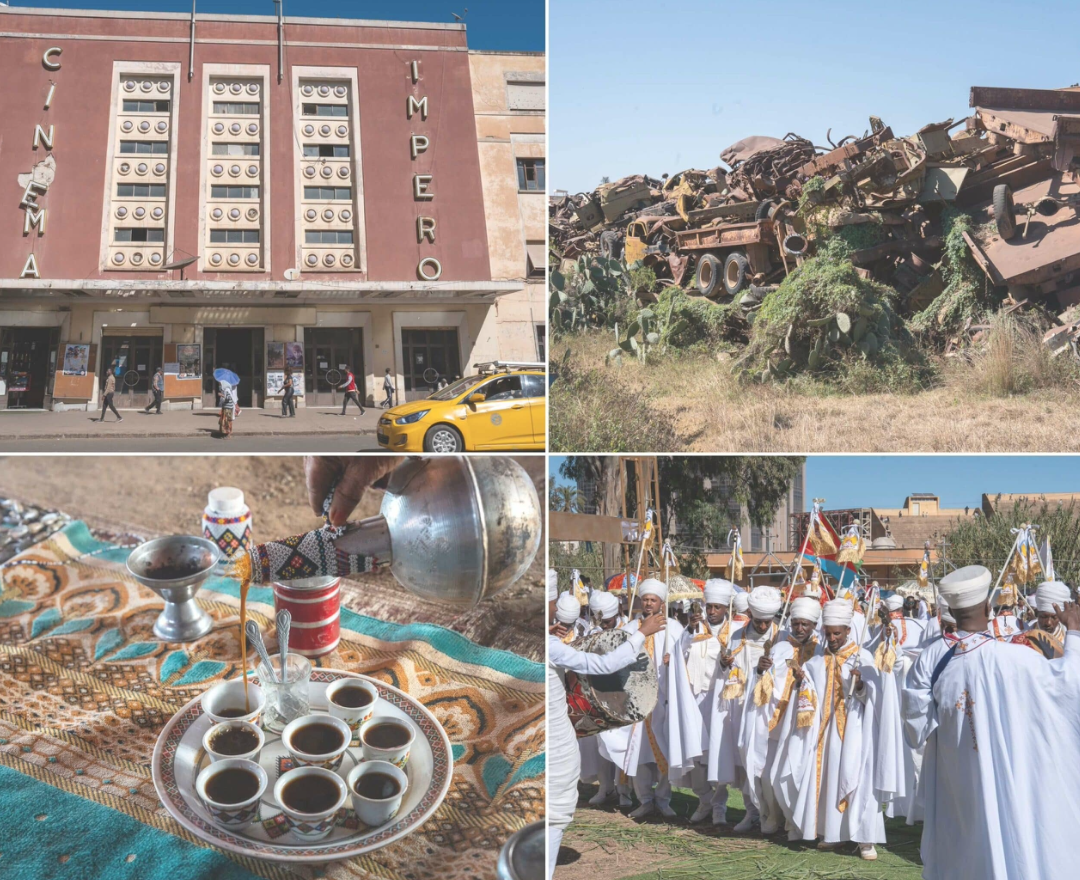
Asmara, at an elevation of about 2,325 m (7,600 ft), is the capital and largest city of Eritrea. It’s celebrated for its exceptionally well-preserved Italian Modernist architecture and was inscribed as a UNESCO World Heritage Site in 2017 under "Asmara: A Modernist African City" . Originally a military outpost, it transformed under Italian rule between 1893–1941 into one of Africa’s most futuristic cities, blending rationalist design with a human scale urban plan .
Top Things to Do
-
Fiat Tagliero Building – A 1938 Futurist gas station with gravity-defying concrete wings, a stunning example of Italian-era architecture .
-
Medebar (Recycling) Market – A vibrant district where craftsmen shape reclaimed metal into useful items, teff into injera, and chilies into spice under hammering stalls .
-
Tank Cemetery – An open-air display of abandoned military vehicles from the Eritrea–Ethiopia war, located just outside the city. Entry requires a permit from the tourism office .
-
Asmara Bowling Center – Dating to the 1950s and originally used by U.S. military, this vintage bowling alley still operates with manual pin setters and local patrons playing games like bocce and pool .
-
National Museum of Eritrea – Housed in an old governor’s palace, showcasing Eritrea’s history from pre-colonial to post-independence, with artifacts and cultural exhibits .
-
Historic cafés & cinemas – Iconic spots include Cinema Impero, Cinema Roma, Bar Pasticceria Vittoria, and Albergo Italia, offering Italian pastries, coffees, gelato, and traditional Eritrean cuisine .
-
Colonial landmarks – Explore Liberation Avenue, the Roman Catholic Cathedral of Our Lady of the Rosary, Grand Mosque, Opera House, Synagogue, and Italian Cemetery—all reflecting multicultural legacy .
Eat & Drink
-
Italian-influenced local cuisine at spots like Albergo Italia and Top Five Hotel Restaurant, serving pasta, local stews, juices, and coffee .
-
Coffee culture is vibrant—try traditional Eritrean coffee ceremonies at local cafés like Kit Kat Café or Cinema Roma for rich brews and pastries .
-
Local specialties include Eritrean beer, honey wine, feta cheese, and teff-based bread with spicy stews, often enjoyed in both market stalls and sit-down venues .
Where to Stay
-
African Village Hostel – Best for budget travelers: historic colonial building, dorms from around $10, private rooms around $30, very clean .
-
Top Five Hotel – Mid-range, clean with en-suite rooms from ~$20, on-site restaurant popular with locals for Eritrean and Italian meals .
-
Crystal Palace Hotel – Higher-end with better amenities, rooms starting ~$60 .
Travel Tips
-
Best time to visit: Dry season from October to April with mild temperatures at high altitude.
-
Language & currency: Tigrinya, Arabic, and English are spoken. Eritrean nakfa (ERN) is the currency. ATMs exist but bring cash for local vendors.
-
Transport: The city center is walkable. Taxis are available; guides can assist with permits needed for attractions like the tank cemetery.
-
Safety & etiquette: Generally safe and welcoming. Asmara is small and calm. Respect local sensitivities: permits may be needed for certain sites, and photography may be restricted in official areas.
-
Connectivity: Internet access is limited. Use Wi‑Fi in hotels or cafés, and travel documents should be carried at all times.